One Automation Partner, One Architecture, One Point of Accountability
In regulated industries, splitting automation across vendors creates audit risks, accountability gaps, and security holes. Here's the case for unified architecture.


If you’re in financial services, healthcare, or legal, your automated processes need to be documented well enough that your team can explain them — to an auditor, to a new hire, or to a regulator who asks how client data moves through your systems.
Now imagine trying to answer those questions when three different vendors each built a piece, with their own standards and their own idea of what “documentation” means.
Automation architecture in these environments isn’t just a technical concern. It’s a traceability and accountability concern.
The audit question
When your team faces an audit or internal review, they need to explain how data flows through your automated processes — what’s accessed, how it moves, what controls exist, who maintains it.
With one partner: one documentation standard, one architectural pattern, one team that can walk through the entire system and answer questions clearly.
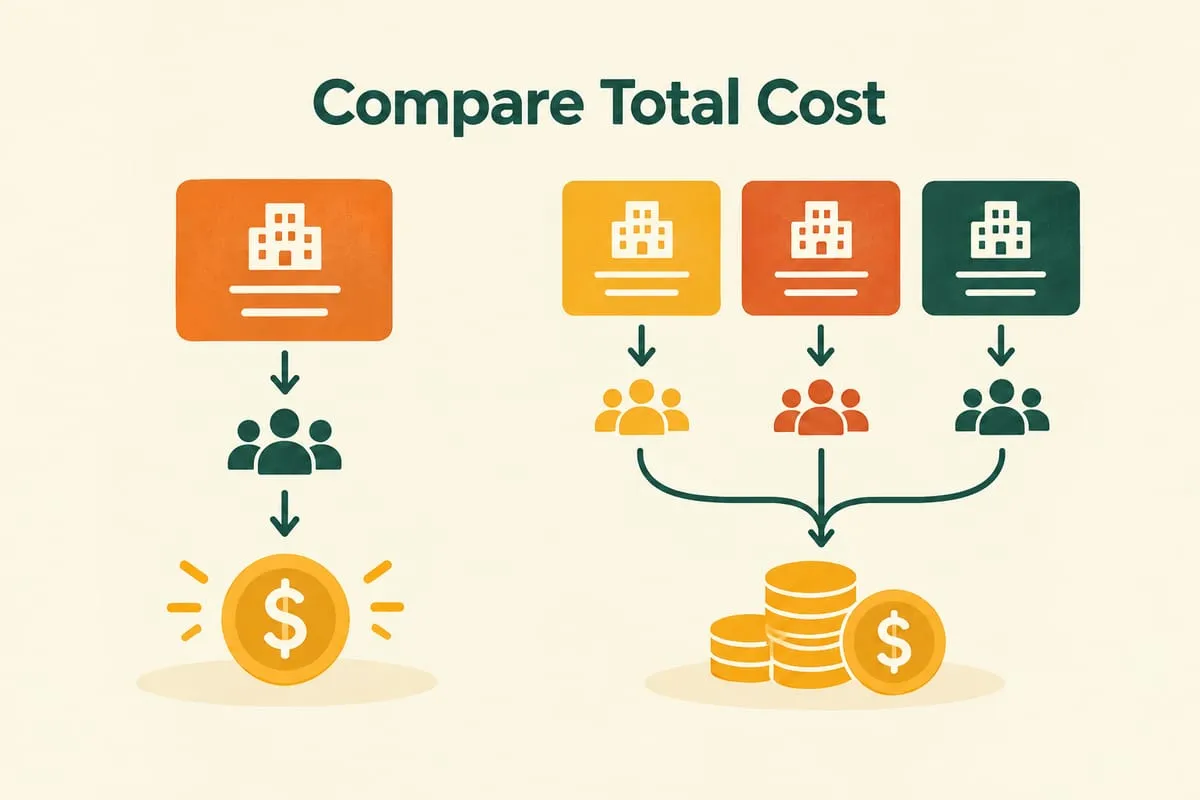
With multiple vendors: fragmented documentation (if it exists at all), inconsistent standards, and no single person who can trace how a new client record flows from your onboarding system through to invoicing and reporting. In a real review, that gap becomes your problem — not theirs.
For financial services firms especially, unclear ownership of automated processes creates real risk: delayed responses to regulators, difficulty demonstrating controls, and gaps that are hard to close after the fact.
Architectural integrity
One partner designs the entire system with consistent patterns for error handling, logging, and data access. When your team needs to review how something works — or demonstrate it to a third party — there’s one approach to learn, not three.
Multiple vendors? Multiple approaches to everything. Vendor A logs errors to a monitoring dashboard. Vendor B logs to a text file. Vendor C doesn’t log errors at all. Good luck building a compliance report from that.
Data access is the big one. With one partner, you have consistent credential management and access controls. With multiple vendors, you’re granting access to multiple external teams — each another set of people with access to your client data. Every additional vendor is an additional attack surface.
The accountability chain
When something breaks, you need clear ownership. Fast.
One partner: something breaks, you call them, they fix it. They built it. They own it.
Multiple vendors: something breaks, and first you need to figure out whose automation caused it. Vendor A says the incoming data is wrong. Vendor B says they’re receiving malformed data. You’re mediating a dispute while your process is down and your compliance clock is ticking.
In regulated industries, downtime means missed filing deadlines, incorrect client reports, compliance violations. You need fast resolution. Fast resolution requires clear ownership.
Automation in regulated or sensitive environments isn’t just about efficiency. It’s about being able to explain how things work, who’s responsible, and what happens when something changes. That’s easier when one team owns the full picture — consistent logging, clear documentation, and a single point of contact for questions.
Related: How to choose a single automation partner you can actually trust long-term →
If traceability and clear ownership matter to your business, we’d be happy to walk you through how we approach architecture for regulated and compliance-sensitive environments.