How to Know If Your Business Processes Are Ready for AI Automation
AI automation isn't magic and it's not for every business. Here's an honest checklist to figure out if your business is actually ready.

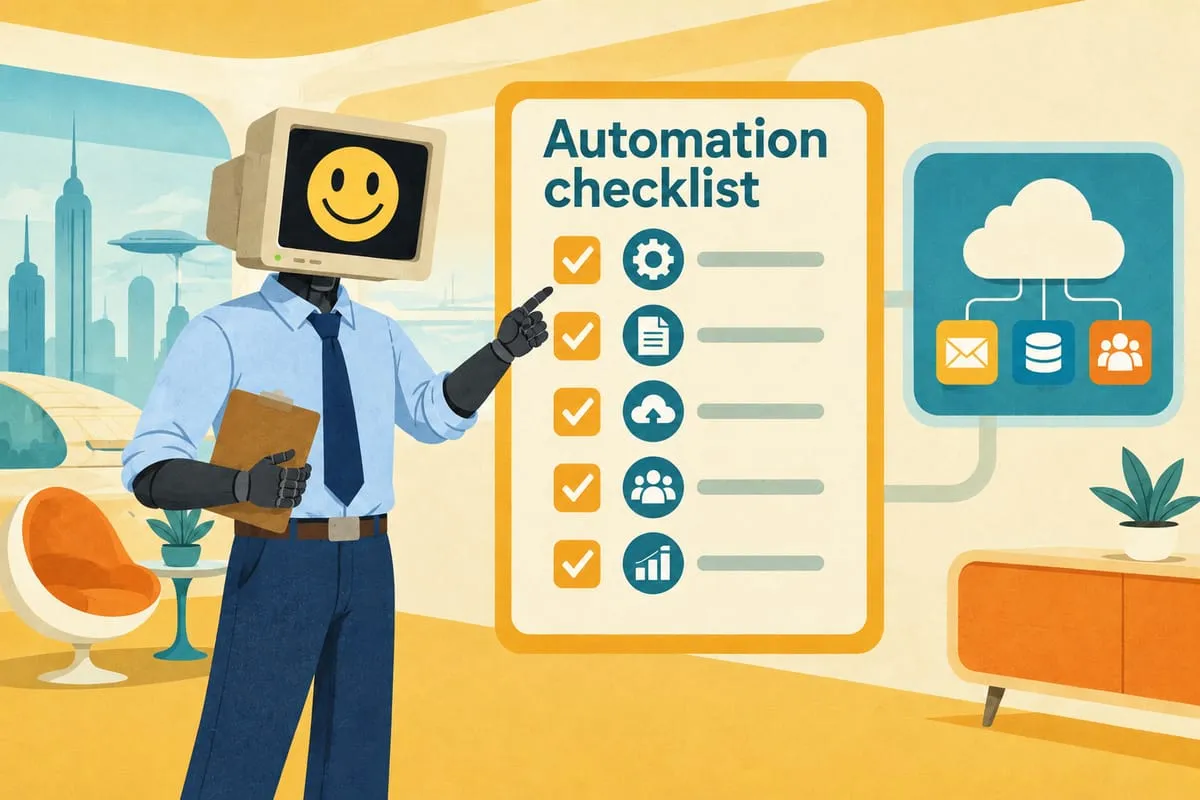
AI automation isn’t magic and it’s not for every business. Here’s an honest checklist to figure out if your business is actually ready.
If you check most of these boxes, automation could have a real impact. If you don’t, there might be foundational work to do first. Either way, it’s better to know before you invest.
Your Systems Are Digital
You use cloud-based software. QuickBooks Online, Microsoft 365, Google Workspace, WooCommerce, Shopify, or similar. Your documents exist as digital files, not only on paper.
Automation connects digital systems. If your entire operation is paper-based, with handwritten orders, paper invoices, and filing cabinets, the first step is digitization, not automation. That doesn’t mean you can’t get there. It just means there’s a prerequisite.
Most businesses that contact us are already past this point. If you’re reading this blog post, your systems are probably digital enough.
Your Processes Are Repeatable
The same steps happen in roughly the same order every time. There might be exceptions and edge cases, but there’s a “happy path” that covers 70 to 80% of cases.
If every single transaction is completely unique and requires creative judgment from start to finish, automation has less to grab onto. But that’s rare. Even businesses that think their processes are unique usually discover, during discovery, that 80% of their work follows a consistent pattern.
You Have Enough Volume to Justify It
If you process 5 invoices a month, automation probably isn’t worth the investment. The setup cost won’t pay back quickly enough.
If you process 50 or 500 invoices a month, the math starts working fast. The general threshold: if a process takes more than 10 to 15 hours per week of someone’s time, it’s a strong candidate for automation. Below that, it depends on the complexity and the error rate of the manual process.
You Can Identify the Inputs and Outputs
You know what triggers the process: an email, a form submission, a phone call, a file upload. And you know what the end result should be: an invoice in QBO, an order in a supplier portal, a confirmation email to a customer.
If you can describe the start and the end, we can figure out the middle. The start and end points define the scope. The middle is where automation engineering happens.
You’re Willing to Standardise (At Least a Little)
Automation works best when there are clear rules. If every customer gets a slightly different workflow based on whatever someone feels like doing that day, we’ll need to establish some consistency first.
This doesn’t mean rigid. It means documented. “Customers in tier A get pricing X. Customers in tier B get pricing Y. Orders over $1,000 need manager approval.” If you can write down the rules, even approximately, automation can follow them.
If the rules live entirely in one person’s head and change based on gut feeling, the first step is getting them documented. Sometimes discovery itself is enough to make this happen. Read more: What Is Discovery and Why Do I Need It Before You Build Anything?
You’re Okay with a Transition Period
The automation won’t be perfect on day one. There will be a period where you’re reviewing every output, catching edge cases, and building confidence. This is normal and healthy.
Starting with human approval on every item and gradually removing training wheels is the right approach. If you expect to flip a switch and never think about the process again, you’ll be disappointed. If you expect a progressive improvement where the system handles more and more over time with you in control of the pace, you’ll be satisfied. Read more: How to Set Up Human Approval Steps in Business Automation
What If You Don’t Check Every Box?
That’s okay. Not checking every box doesn’t mean automation is off the table. It means there might be some prep work first.
Low volume? Start by automating the most time-consuming process and expand later. Not fully digital? Migrate your key systems to cloud-based tools first. Processes aren’t standardised? Use the automation discovery process to document and standardise them, which has value even without automation.
The readiness checklist isn’t a gate. It’s a guide. If you’re curious about where your business stands, send us a note describing your workflow. We’ll tell you honestly whether automation makes sense right now or whether there’s groundwork to do first.