What Is Discovery and Why Do I Need It Before You Build Anything?
Every prospect tells me their processes are simple. Discovery proves them wrong every time. That's not a bad thing. That's the whole point.


Every prospect tells me their processes are simple. And every single time, discovery proves them wrong. That’s not a bad thing. That’s the whole point.
The Objection
“My processes are straightforward. I’ve already described them. Why can’t you just start building?”
I hear this on almost every first call. And the business owner isn’t wrong, they do know their business better than anyone. But there’s a gap between how people describe their processes and how those processes actually work in practice.
The description covers the happy path, the 70% of cases where everything goes smoothly. The other 30% is edge cases, exceptions, workarounds, and tribal knowledge that only surfaces when you sit down and walk through the actual work click by click.
What Discovery Actually Is
Our automation discovery process is 2 to 3 structured sessions, each 60 to 90 minutes, where we sit with the person who actually does the work. Not the owner (unless they are the operator). The person who processes the orders, enters the invoices, coordinates with suppliers.
We watch them process real orders, real invoices, real quotes. We record every step, every decision point, every exception. “What do you do when the PO doesn’t have a quantity listed?” “What happens when the customer uses a different product name than what’s in your catalogue?” “How do you handle rush orders versus standard orders?”
Between sessions, we spend 8 to 10 hours on independent analysis. Mapping the process flows. Documenting the integration points between systems. Identifying where automation will have the most impact.
What Discovery Produces
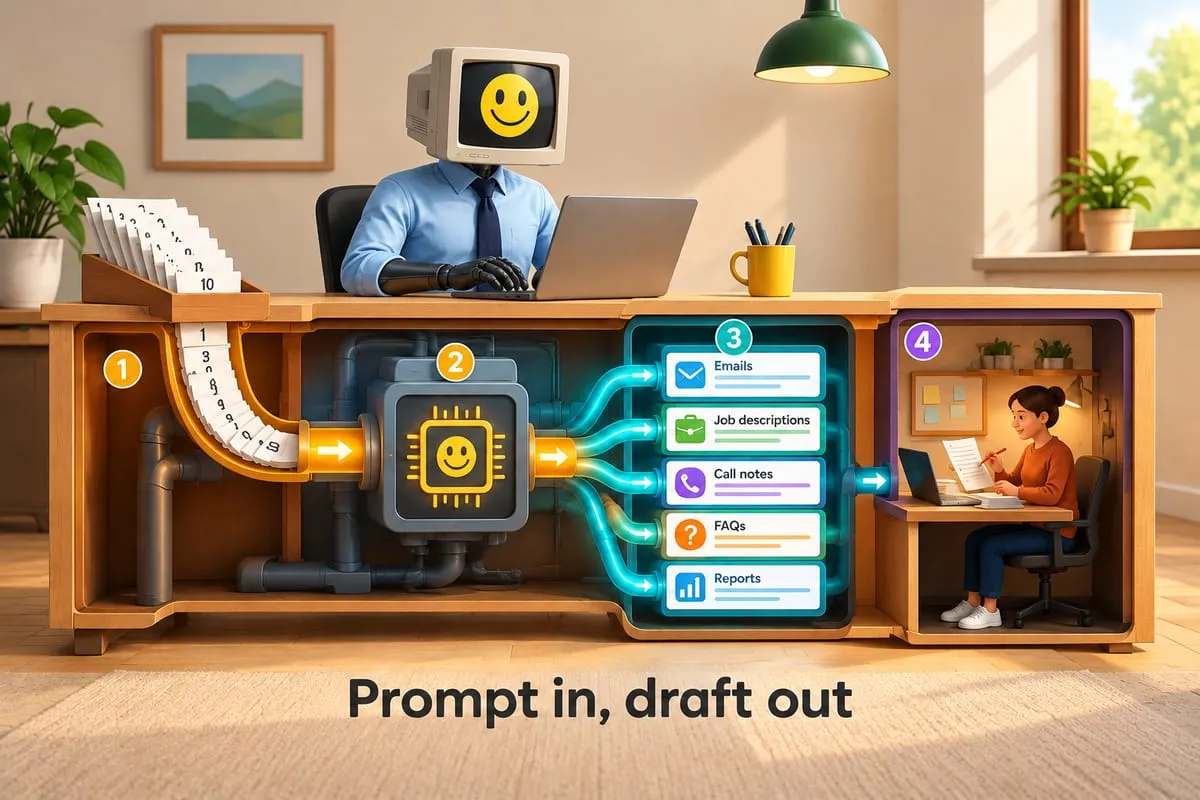
At the end of discovery, you get a Solution Design Document. It’s a tangible deliverable that belongs to you and includes:
Detailed process maps for every workflow we examined. Integration requirements and data flows between all your systems. Feature specifications for the automation. A phased build plan with priorities, what to automate first, what to tackle later. An implementation roadmap with timeline and cost estimates.
This isn’t a vague proposal. It’s a detailed blueprint that any technical team could build from.
Why It Saves Money
Without discovery, we’d be guessing. We’d build something based on a 30-minute conversation, and then spend weeks revising it when we discover the edge cases. Those revisions cost more than discovery itself.
With discovery, we scope the build accurately, price it fairly, and avoid the “oh wait, we also need this” cycle that blows up project budgets. Every hour spent in discovery saves multiple hours during the build.
A Real Example
A prospect once described their order process as “simple, we just get emails and enter them into QuickBooks.” During discovery, we found:
Multiple pricing tiers for the same products depending on the customer category. A multi-currency challenge with supplier bills in one currency and customer invoices in another. A cross-referencing system using order numbers with a custom naming convention that wasn’t documented anywhere. A shipping cost calculation based on historical intuition with no formula. And an explicit requirement that bank reconciliation stays manual because the automated matching in QBO wasn’t reliable enough for their needs.
None of that came up in the initial conversation. All of it would have caused problems if we’d “just started building.” The discovery process turned what could have been weeks of back-and-forth revisions into a clean, accurate specification.
The Portability Promise
Even if you decide not to work with us after discovery, the Solution Design Document is yours. You can take it to another vendor and they’ll have a complete blueprint to build from.
We don’t hold your process analysis hostage. If our build quote doesn’t work for your budget, or if you want to get a second opinion, the discovery deliverable gives you everything you need to have that conversation with anyone.
The Investment
Discovery costs $1,500 to $5,000 depending on the number of processes and their complexity. It’s a flat fee, separate from the build. You pay for the analysis, and the deliverable is yours whether you build with us or not.
For what it produces, a detailed technical specification and implementation plan, it’s a fraction of what a traditional consulting firm would charge for the same analysis. And it’s a fraction of what you’d spend on a poorly scoped build that needs to be reworked.
If you’re considering automation and want to understand exactly what’s involved before committing to a build, book a discovery call. We’ll start with a free conversation to see if discovery makes sense for your situation.