AI Assistant vs. AI System: Why Using ChatGPT Isn't the Same as Having AI in Your Business
Your team uses ChatGPT. Great. That's a starting point, not a strategy. Here's the difference between AI as a tool and AI as a system — and why it matters.

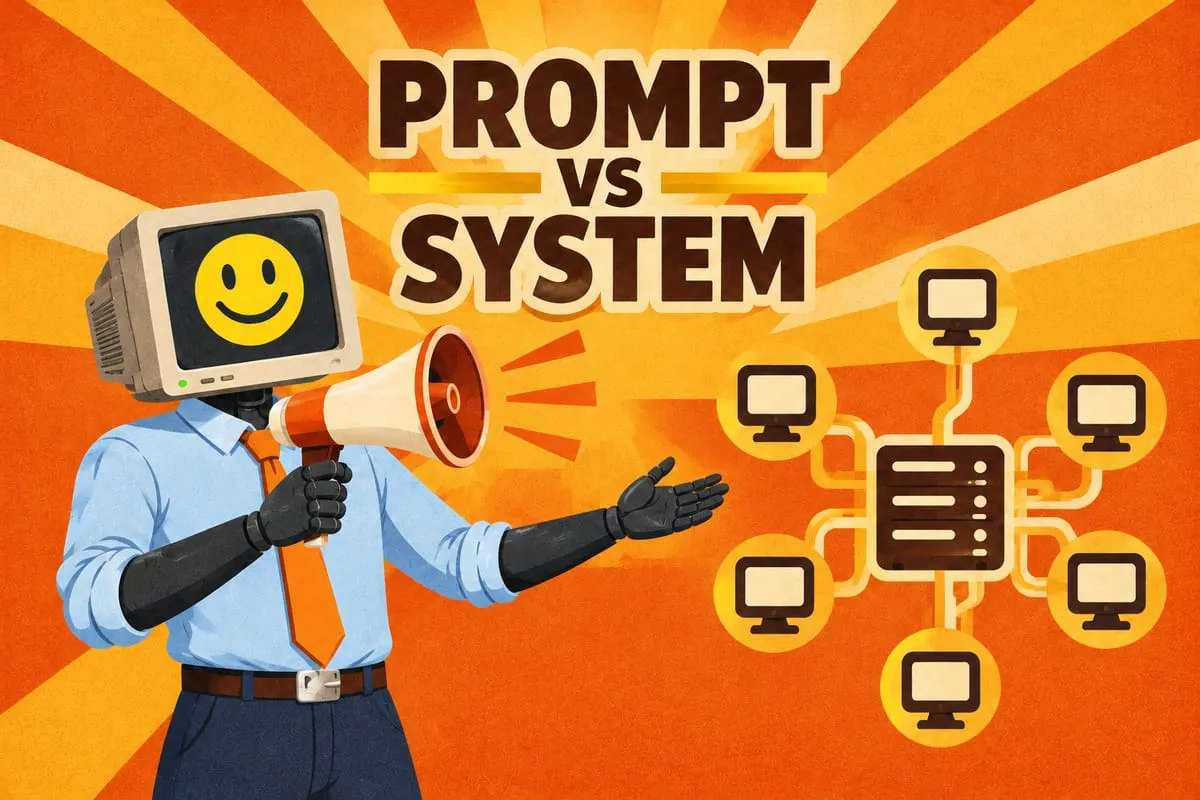
This is part of our AI for Business Owners series, Season 2 — for readers who’ve covered the basics and are ready to go deeper.
”We Already Use AI”
I hear this all the time. I’ll be talking with a business owner about automation, and they’ll say, “Oh, we already use AI. Sarah has a ChatGPT subscription.”
I always nod. Because they’re not wrong. Sarah probably is getting real value out of it. She’s drafting emails faster, summarizing documents, brainstorming ideas. That’s genuinely useful.
But it’s not what I’m talking about.
Saying “we use AI” because someone on your team has ChatGPT is like saying “we have a communication strategy” because you have email. Email is a tool. A communication strategy is a system. They’re not the same thing — and confusing them costs you real money.
What an AI Assistant Actually Is
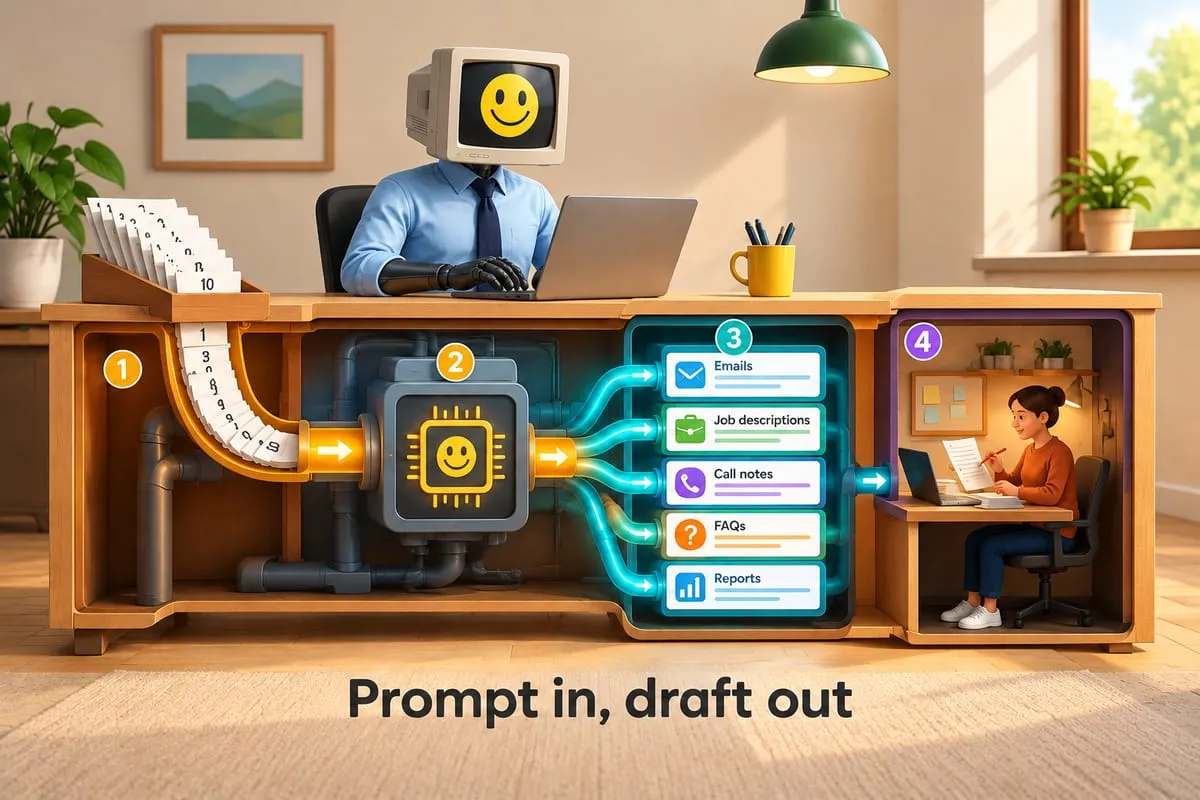
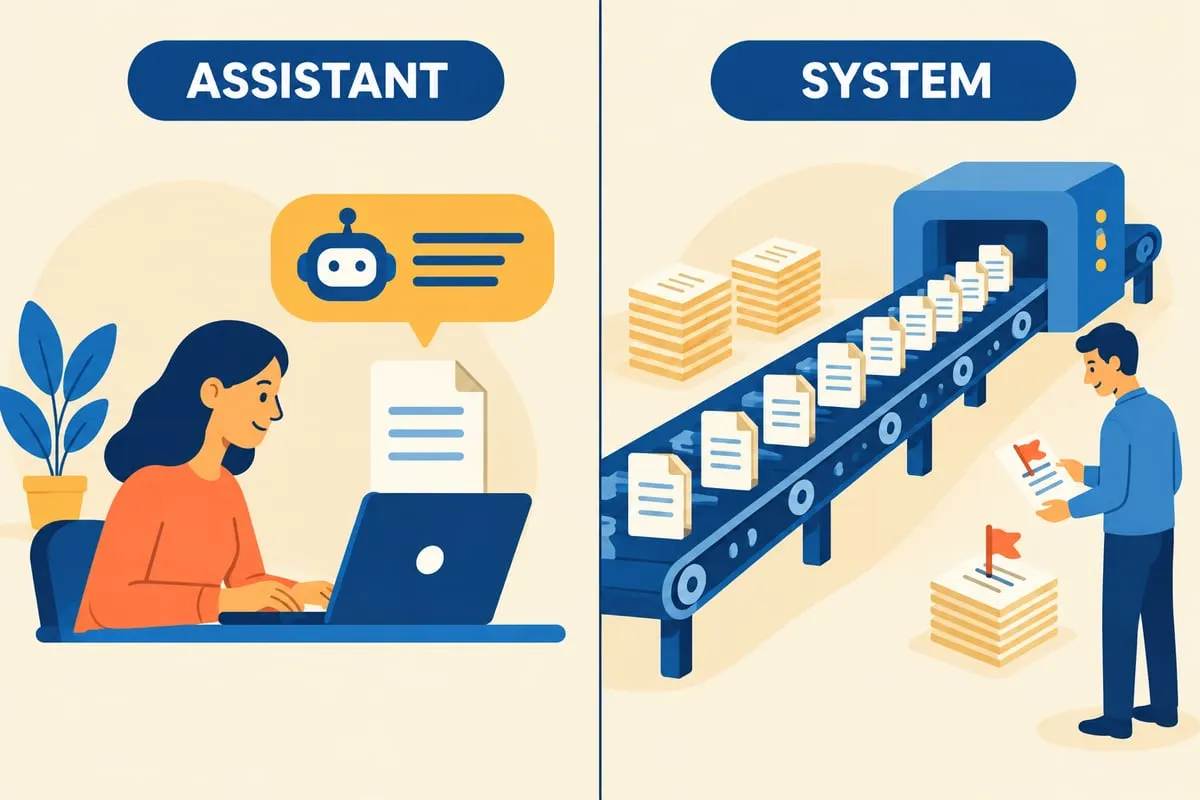
An AI assistant is what most people picture when they hear “AI at work.” You open ChatGPT, Claude, or Copilot. You paste something in. You get output. You copy it somewhere else.
The key word is you.
You’re still doing the work. You’re just doing it faster. You’re the one who decides to open the tool, the one who frames the question, the one who takes the result and moves it to the next step. Every single time.
That’s not a knock on AI assistants. If you followed along with Season 1, you know they’re a great place to start. But an assistant has a ceiling, and that ceiling is your time and attention.
A person can only copy-paste so fast.
What an AI System Looks Like
An AI system runs without you.
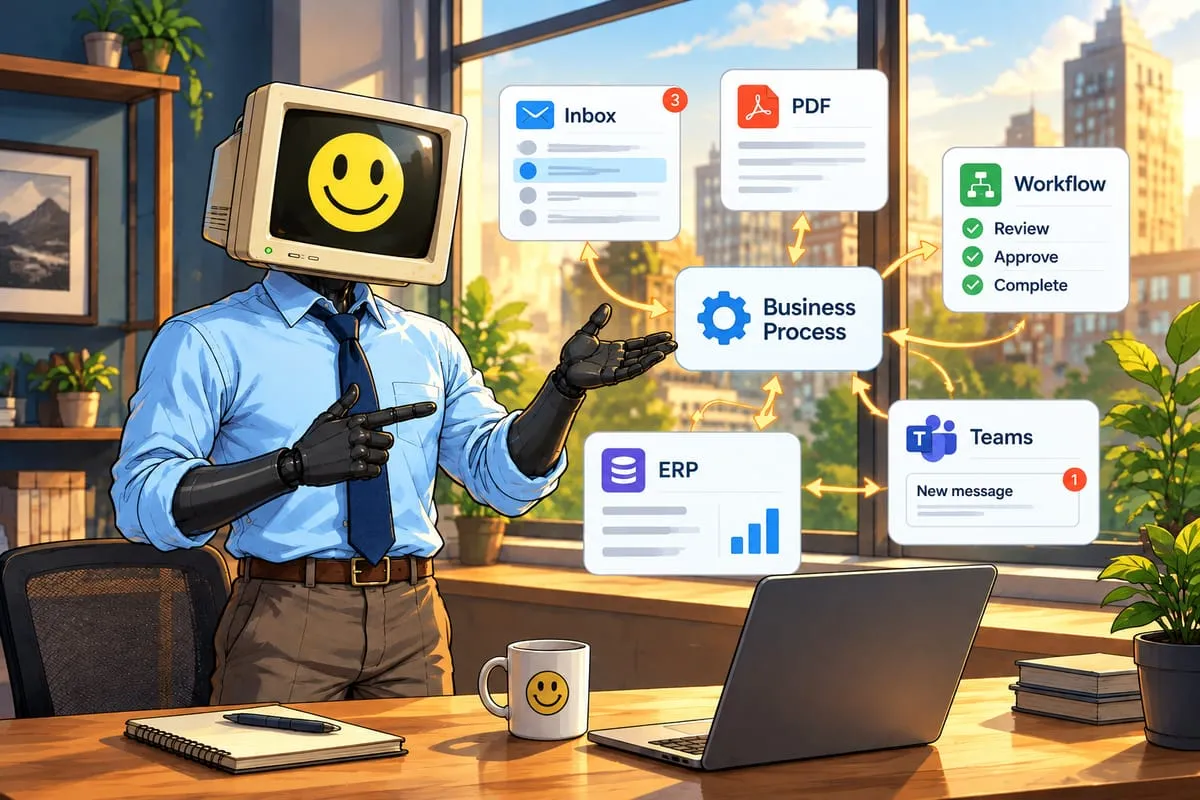
Here’s a real example. A distributor receives purchase orders by email — dozens a day, all in different formats. An AI system reads those emails automatically, extracts line items from the attached PDFs, checks inventory in their ERP, creates the sales orders, and sends confirmations back to the customer. No one opens ChatGPT. No one copies and pastes. It just runs.
That’s not an assistant. That’s infrastructure. Multiple tools connected together, workflows triggering automatically, AI handling the judgment calls (like figuring out which SKU maps to “Blue Widget 12-pack”) while humans handle the exceptions.
The difference isn’t the AI itself — it’s whether a person is in the loop for every single transaction.
Why People Confuse Them
Honestly? Because vendors want you to. Every software company slaps “AI-powered” on their product page. When everything is “AI,” the word stops meaning anything specific.
So a business owner hears “AI” and thinks of the thing they already know: ChatGPT. They don’t picture the behind-the-scenes system because they’ve never seen one running. It’s invisible by design.
The confusion also comes from a natural place. Both involve AI. Both save time. But a hammer and a nail gun both involve hitting nails — and you wouldn’t use them interchangeably.
Where Each One Shines
AI assistants are brilliant for work that’s creative, one-off, or requires judgment.
A salesperson drafting a follow-up email that needs the right tone for a tricky deal. A manager asking AI to summarize a 40-page report and pull out the three things that matter. A bookkeeper using ChatGPT to help categorize an unusual transaction they’ve never seen before. These are thinking tasks, and assistants make your team’s thinking faster and sharper.
AI systems are built for work that’s repetitive, multi-step, and high-volume.
That same bookkeeper’s bank feed has 500 transactions a month. An AI system categorizes 90% of them automatically, matching patterns from previous months, and flags the weird ones for human review. The bookkeeper’s judgment is still critical — but only for the 50 transactions that actually need it, not the 450 that don’t.
A salesperson using AI to draft follow-ups is helpful. A system that automatically sends personalized follow-ups based on CRM triggers — so the rep only reviews edge cases — is a different league. A manager summarizing reports weekly is fine. A system that pulls data from your project tracker, accounting software, and CRM, generates the report, and drops it in your inbox every Monday at 8am? That’s three hours back every week without thinking about it.
The Real Power Is Both
Here’s where it gets interesting.
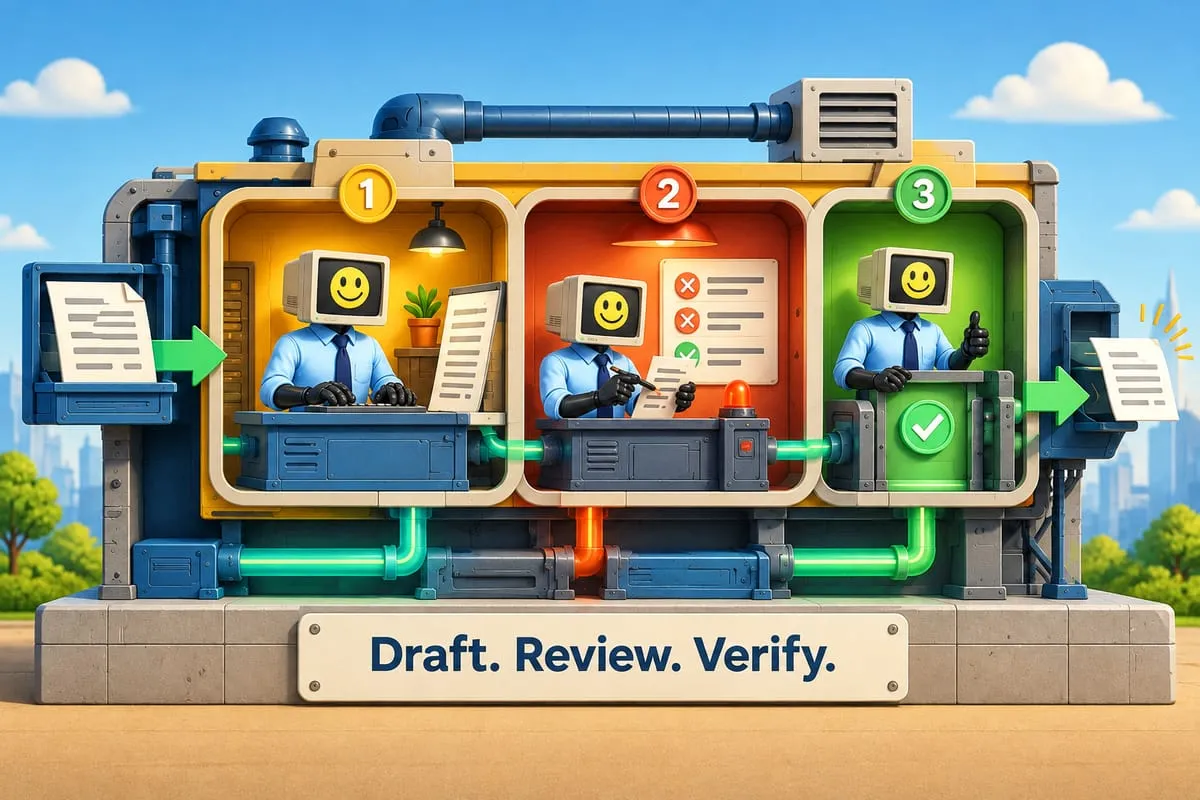
The best setups don’t choose between assistant and system. They layer them. The AI system handles the processing work — the volume, the repetition, the multi-step workflows that would eat your team alive. The AI assistant helps your team with the thinking work — the creative decisions, the edge cases, the judgment calls that the system flags for review.
Together, they cover ground that neither could alone.
Your bookkeeper isn’t manually categorizing 500 transactions or using ChatGPT to help with 500 transactions. The system handles 450. The bookkeeper uses an AI assistant to research the remaining 50. That’s the whole picture.
This Is the Progression
If you’ve been following this series, you’ll recognize the arc.
Season 1 was about understanding AI and learning to use it as an assistant. That’s stage one. It’s real. It matters. Don’t skip it.
Stage two is looking at your business and asking: which of these tasks should I stop doing manually — even with AI help — and turn into a system?
Not everything should be automated. We’ve talked about why starting with the problem matters more than starting with the technology. And understanding the difference between AI, automation, and RPA helps you pick the right approach for each problem.
But if your team is still copying output from ChatGPT into spreadsheets 30 times a day, you don’t have an AI strategy. You have a faster version of the same bottleneck.
”We Already Use AI” Is Not a Strategy
Using AI tools is a starting point. A good one. But if that’s where it ends, you’re leaving the biggest gains on the table.
The assistant makes your people faster. The system makes your business faster. One depends on someone being at the keyboard. The other runs while everyone’s at lunch.
Most businesses we work with are stuck at stage one. Not because they’re behind — because nobody showed them what stage two looks like. Now you know.
Ready to move from assistant to system? That’s what we build.