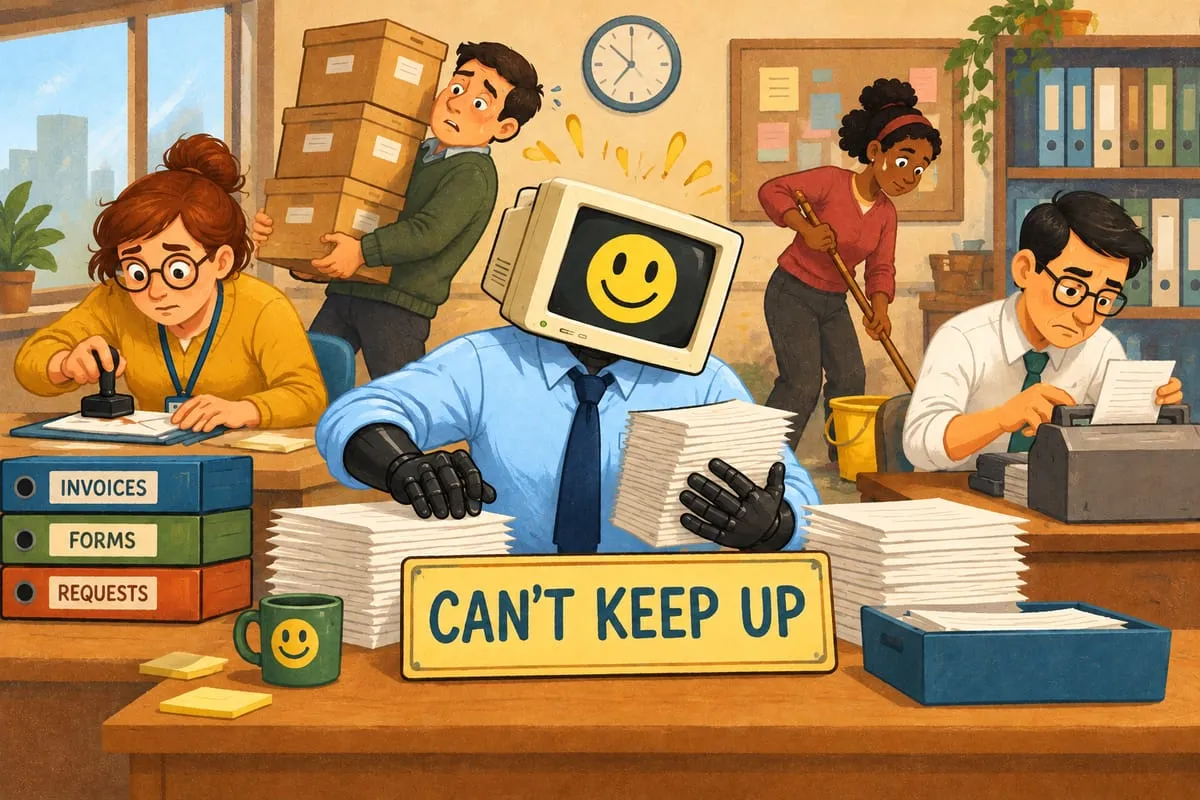
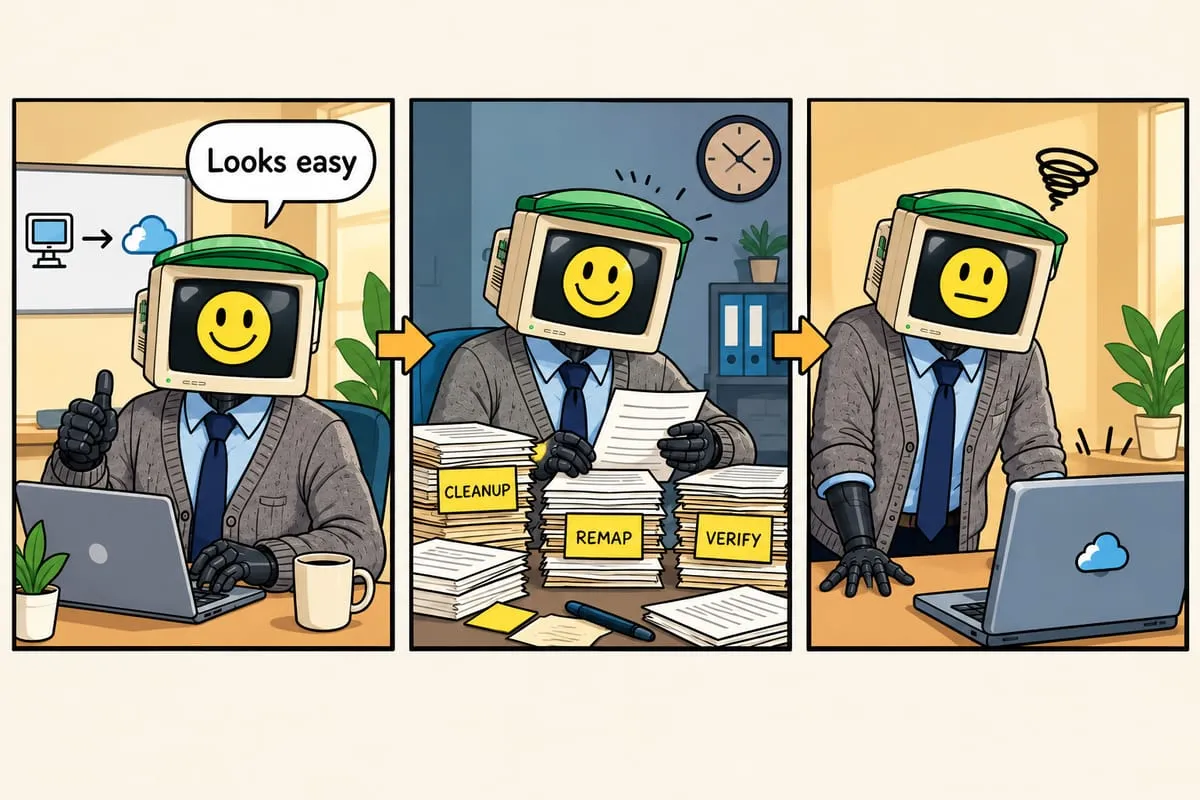
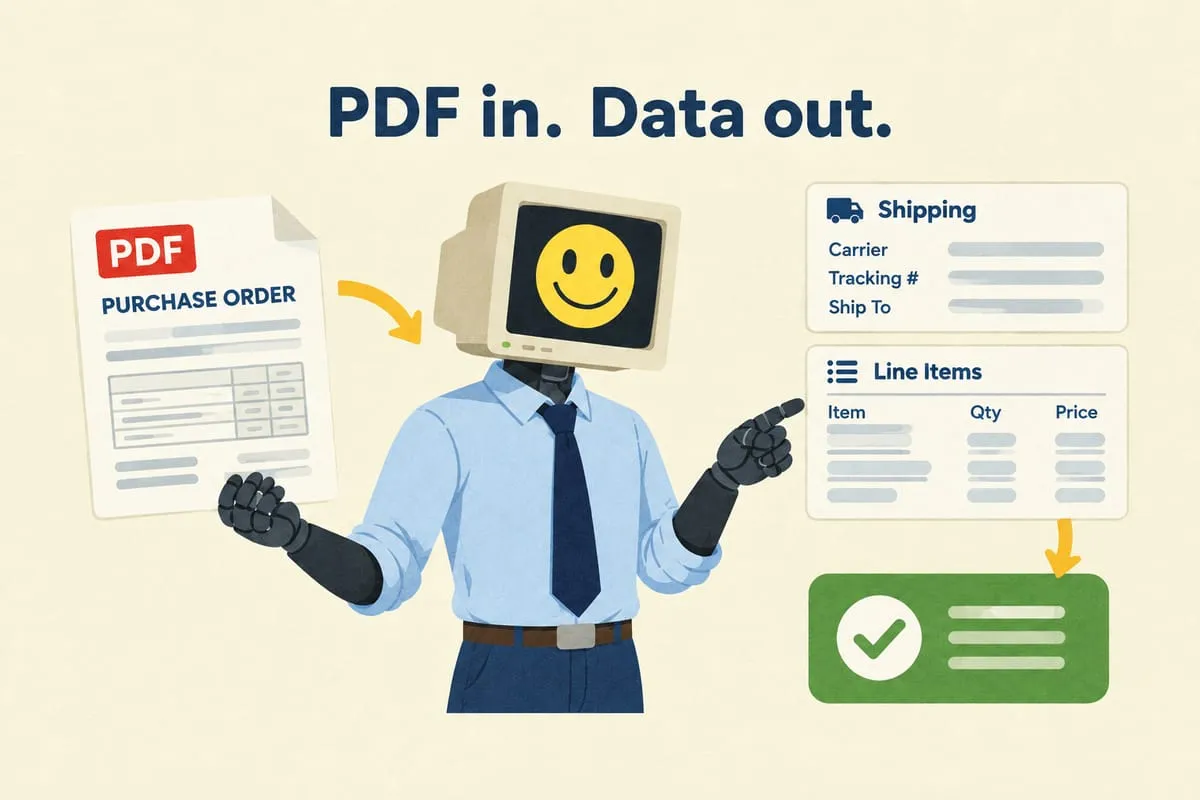
What Happens When the Automation Breaks? (Spoiler: We Already Know)
The scariest thing about automation isn't when it breaks. It's when it breaks and nobody notices. Here's how we prevent that.

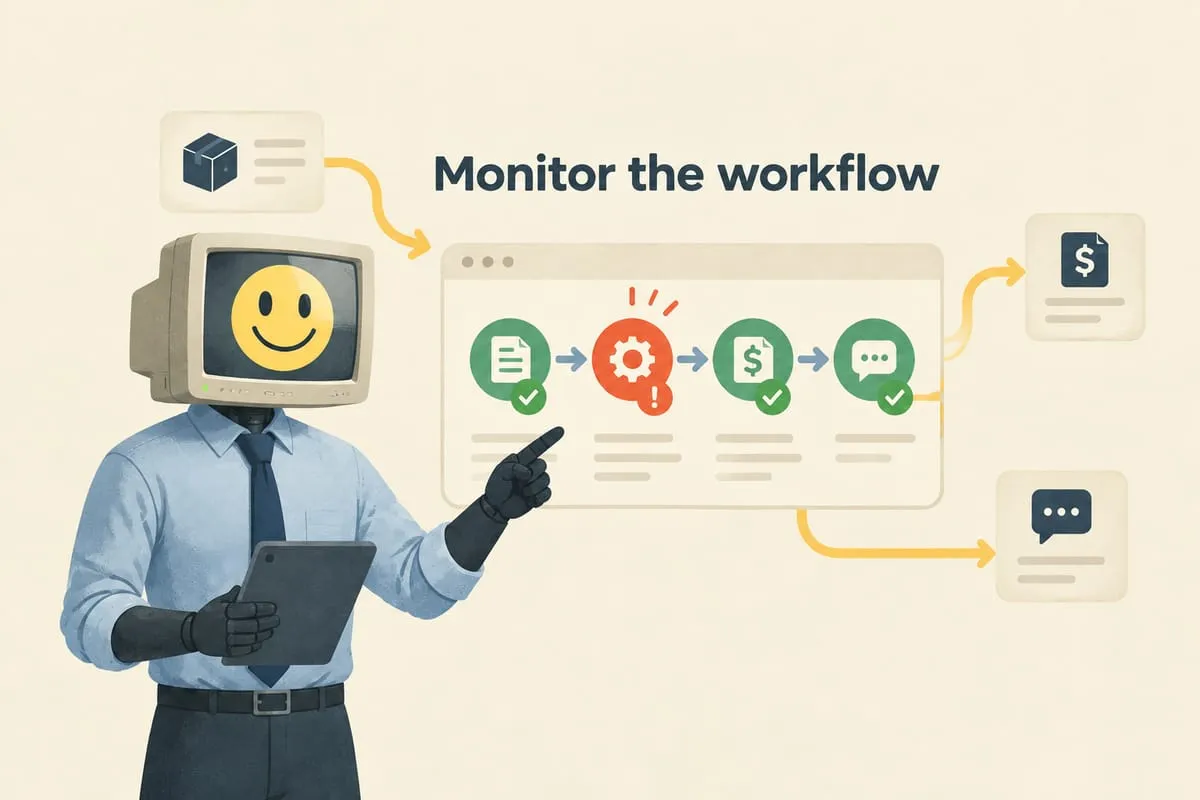
The scariest thing about automation isn’t when it breaks. It’s when it breaks and nobody notices.
That fear is the number one reason business owners hesitate to automate their core operations. Orders, invoices, supplier communication. If something fails silently and you don’t catch it for a week, that’s missed orders, angry customers, and an accounting mess.
The fear is reasonable. But the answer isn’t “don’t automate.” The answer is “automate with proper monitoring.”
Built to Handle the Unexpected
Every automation we build assumes things will go wrong. APIs go down. Email servers hiccup. Documents arrive in formats nobody expected. The question isn’t whether failures happen — it’s whether the system handles them gracefully.
Our systems are designed so that if something fails and retries, you don’t end up with duplicate invoices or double orders. Every action is tracked the moment it happens, so there’s never a gap between “it happened” and “it’s recorded.”
We Catch Problems Before You Do
Our monitoring systems continuously check for anything out of the ordinary — orders that seem stuck, processes that didn’t complete, or anything that doesn’t look right.
When something is flagged, we’re notified immediately. Not in a log file nobody reads. An actual alert that gets acted on.
We typically know about problems before our clients do. Often the first time a client hears about an issue is when we message them saying “we noticed something this morning, we’ve already fixed it, here’s what we did.”
What You See
You don’t need to monitor the automation. That’s our job. You use the app, review orders, approve items, and handle exceptions.
If something needs your attention, it shows up clearly in your dashboard — a document that needs a second look, a customer order that doesn’t match a quote, or a supplier bill that seems off.
If something goes wrong behind the scenes, we handle it. Often before you even notice.
Full Traceability
Every action the system takes is recorded. If your accountant asks “why does this invoice have this amount?” three months from now, we can trace it back to the original purchase order and show exactly what happened at every step. No guessing. No “I think someone entered it wrong.”
Why Ongoing Management Matters
If someone builds you an automation and walks away, who’s watching it? Who notices when an API changes? Who catches that a new customer’s documents look different from everyone else’s?
Automation is not a “set it and forget it” product. It’s a living system. APIs change. Business rules evolve. New situations come up as your business grows. The monitoring and management piece is what makes the difference between an automation that works for a month and one that works for years.
That’s why DigitalStaff’s managed automation model exists. The alternative — an unmonitored automation running your business operations — is genuinely risky. Read more: The Difference Between Zapier, Make, and DigitalStaff’s Custom Automation (And When You Need Each)
If the reliability question is what’s holding you back from automating, let’s talk about it. We’d love to show you what peace of mind looks like when your operations are properly managed.